15 November, 2009

Release: Fiji government embraces OLPC

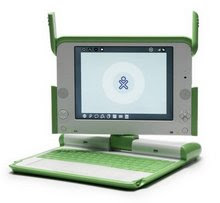
Suva, Fiji, November 15, 2009 -- The Republic of Fiji is on target to launch a One Laptop per Child (OLPC) program in 2010 to coincide with the introduction of a new primary school curriculum in the country. Following meetings in the country's capital Suva last week, OLPC's regional director for Oceania, Mr. Michael Hutak, said Fiji had ambitious plans to distribute 70,000 OLPC XO laptops in its schools commencing with a proposed roll-out to 2000 children in the first phase of the program in 2010.

"Fiji's planning is in depth and on target and I am impressed by the broad consultative approach that the government have put in place on OLPC," said Mr Hutak, who met with Fiji's Minister for Education, Mr. Filipe Bole in Suva on Friday. He also met with Fiji's Permanent Secretary of Education, Mr. Filipe Jitoko, and the Deputy Permanent Secretary, Mr. Josef Natau, who is responsible for managing the project.

DPS Natau has established a cross-sector steering committee on OLPC, based in the Ministry of Education (MOE) but with inputs from other Ministries responsible for information, finance, e-government and digital and library services, as well as non-government partners such as the School of Education at the University of the South Pacific. Central to planning is a fully scoped monitoring and evaluation framework which officials are developing with reference to the M&E logframe developed by the Solomon Islands Department of Education for its own OLPC pPilot programme. The Fiji MOE is also looking into integrating OLPC into the new distance learning project it is implementing in partnership with Telecom Fiji in Fiji's more remote islands.

"This whole-of-government approach, with a strong attention to M&E and supported by wide consultations with communities and other stakeholders is a recipe for ensuring sustainability of OLPC not just in Fiji but across the Pacific," said Mr.Hutak, "Fiji's approach is one which other countries in the region might observe and learn."

The meetings came at the conclusion of a two-day OLPC Country Planning Workshop, jointly hosted by OLPC Foundation and the Secretariat of the Pacific Community (SPC) and conducted with the help of the Pacific Regional Initiatives in the Delivery of basic Education, better known as the PRIDE Project, based at USP's Laucala campus in central Suva.
---

The Government of Fiji announced its intention to implement OLPC in a statement in June this year. Fiji is looking for donors to support the project in its initial start-up phase, and has asked the OLPC Oceania Technical Working Group to assist in technical assistance and resource mobilisation.

Fiji is one of at least 15 Pacific island nations to announce an OLPC country program as part of One Laptop per Pacific Child initiative.

One Laptop per Child Foundation is a global non-profit initiative headquartered in Cambridge, Mass. and dedicated to realising better quality education in the developing world through the design, manufacture and distribution of rugged, low-cost laptop computers designed specifically for children aged 6-12.

RELATED LINKS:
Fiji Country Request
Country Planning Workshop
Read more!

01 November, 2009

OLPC Australia takes off online

OLPC Australia has launched an impressive new updated website at http://olpc.org.au, adding to its online presence on Facebook and Youtube.

The new site has a great design, easy navigation and lots of information about OLPC AU's plans to deliver a laptop to every child in remote Australia within 5 years. OLPC AU has already deployed 1,185 XO laptops to 18 remote community schools in the state of Queensland,Western Australia and the Northern Territory.

The charity has attracted some great media coverage including this profile of OLPC Australia's executive director, Rangan Srikhanta, which appeared in The Weekend Australian.

With the support of its founding partner, the Commonwealth Bank, OLPC AU is planning over the next 5 years to "deploy 400,000 laptops at a rate of 10,000 a month in some of the most remote corners of the country".

"People might think it's a pipe dream, but it can be done," Srikhanta told The Australian. "Uruguay did it in less than three years. It's just (having the) will." The following clip is an interview with Natalie Crisp, a Senior Teacher from Shepherdson College, Galiwinku, NT, where OLPC Australia distributed the XO.

Read more!

26 October, 2009

Key dox: easy access

Key documents related to OLPC Oceania can now be accessed at our new online document repository at www.box.net/keydox. A permanent link to the repository now appears in links to resources on the right. Read more!

05 October, 2009

Pacific Tsunami: Message of Condolence and Solidarity

OLPC Foundation expresses condolences to the families and friends of those lost in the earthquake and tsunami of September 30. NZAID has set up a website tracking relief and appeal efforts here. We offer our unreserved solidarity with the people of Samoa and Tonga at this difficult time and look forward to contributing to the effort to rebuild. Read more!

15 September, 2009

OLPC pilot in Patukae thrives one year on

Read more!

All eyes on Solomons as evaluation gets underway

An independent evaluation of OLPC pilots in the Solomon Islands gets underway in the country's remote Western Province this week, marking an important milestone in the application of ICT in basic education in the Pacific.

The evaluation of OLPC deployments in three village schools in Marovo Lagoon has been commissioned by the country's Ministry of Education and Human Resources Development (MEHRD) and will be conducted by the Melbourne-based Australian Council for Educational Research. ACER is the publisher of the OLPC Global Literature Review, the only comprehensive account of evaluation of the XO.


ACER's work will address the government's own Measurable Objectives and evaluation framework. The Solomons' have taken a deliberate and methodical approach to monitoring and evaluation of OLPC since the pilots were deployed in July 2008. It's an approach that has attracted the watchful attention of both donors and the more than 13 other Pacific countries which are introducing OLPC.

For an ongoing account of OLPC evaluations around the world, the blog of World Bank ICT and education specialist, Michael Trucano, is well worth bookmarking. Read more!

12 September, 2009

Solomons endorses scale-up of OLPC pilots

On the eve of a crucial evaluation of a year-old pilot programme, the Government of the Solomon Islands has endorsed the expansion of One Laptop per Child in the country.

"We anticipate that the evaluation report will provide us with information to to determine the possibility of expanding the programme into more schools in the country," wrote the Hon Matthew Wale, Minister for Education and Human Resource Development, in an open letter to OLPC's Oceania director, Mr Michael Hutak.

Minister Wale also announced his country's willingness to participate in the proposed "OLPC Pacific Pool", a standing stock of XO laptops which will feed Pacific deployments in some 14 Pacific nations which are testing OLPC's innovative approach in learning. Mr Wale also endorsed the efforts of the OLPC Technical Working Group to secure major donor funding for poor countries like the Solomons.

Minister Wale presented the letter to Mr Hutak at a meeting in the capital Honiara. Mr Hutak had been visiting the country at the invitation of the Solomons' Honorary Consul in Australia, Trevor Garland AM.

Mr Hutak's visit also included an audience with the Governor General, His Excellency Frank Kabui, and a site visit to the remote Western Province and the village of Patukae, one of three villages to conduct OLPC pilots. The Solomons is one of five countries to benefit from the donation of 5000 laptops by OLPC to the Pacific. The pilots were deployed by the Secretariat of the Pacific Community (SPC), which is OLPC's deployment partner in the Pacific.

MORE INFO: email OLPC's Regional Director for Oceania, Michael Hutak, or phone +61 412 001 052.
Read more!

15 June, 2009

ABC Radio: OLPC takes off in the Pacific

Short radio feature on Australia's Radio National. Listen here. Read more!

24 April, 2009

PNG forges historic OLPC partnership


OLPC PNG, led by Director Dr Alfred Tivinarlik of Divine Word University, has forged an historic partnership with PNG Department of Education:
OLPC teachers training at St Peter Chanel Primary School in Erima Port Moresby was successfully completed and the partnership between National Department of Education, Telikom PNG Ltd and OLPC PNG was launched on Friday 24th April 2009 at St Peter Chanel Primary School, Erima by Secretary for Department of Education Dr Joseph Pagelio, Telikom CEO Peter Loko and Director of OLPC PNG Dr Alfred Tivinarlik.
Some relevant links detailing the practical actions on OLPC in PNG:
Read more!

17 April, 2009

Pacific ready for OLPC's "quantum leap forward"

In a key acknowledgment of its growing acceptance in the Pacific, OLPC has been referenced in the region's new strategic education blueprint as contributing to a potential "quantum leap forward" in education standards in the region.

With a vision aspiring to "quality education for all", the Pacific Education Development Framework 2009-2015 (PEDF), cites the OLPC deployments around the region -- now in five countries with eight more in the queue -- as evidence that "Pacific education systems are making increasing use of the advantages [ICT] affords".
The PEDF, launched in March at the 7th Forum Education Ministers' Meeting in Tonga, will guide education policy in Pacific countries in the run up to the 2015 deadline on the Millennium Development Goals.

Citing "encouraging results" from initiatives such as OLPC's programs in Niue, Nauru and the Solomon Islands, the framework (p.19) says students were:
"...more interested and motivated, absenteeism reduced, learning as measured on test scores improved, collaboration and teamwork enhanced, and communication and computational skills improved."
and...
"There is now a potential for Pacific countries to move beyond incrementalism and with assistance of ICTs make a quantum leap forward in realising goals of access, quality and equity in education."
OLPC Oceania is now working with operational and donor partners to turn this vision into reality.
Read more!

01 April, 2009

Oceania's first OLPC deployment


Gaire, 45 minutes from Papua New Guinea's capital Port Moresby, was the first OLPC school in Oceania, deployed in early 2008 with the technical assistance of the Secretariat of the Pacific Community. This story comes from Australia Network's Clement Paligaru and you can read more from Clement on his blog, Pacific Pulse. Read more!

31 March, 2009

Pacific Educators get behind OLPC Oceania

OLPC won warm acceptance at the recent 7th Pacific Forum Education Ministers’ Meeting (FEdMM), in Nuku'alofa, Tonga this week with no less than 13 Pacific Island countries requesting to participate in a OLPC Oceania Country Trial program. This followed acknowledgment in the keynote address of growing acceptance of ICT and OLPC in the region.

Pacific Islands Forum Secretariat Secretary General, Tuiloma Neroni Slade, told Education Ministers and Officials from 16 Pacific nations:
“ An example is the development challenge that the region faces with HIV and AIDS. Information Communications Technology, or ICT, has a much more important role in education than perhaps it did seven or eight years ago. Many countries have engaged with the One Laptop Per Child initiative and we hope that the educational benefits of this and other ICT ventures will be worthwhile, as ICT has much to offer our region.”
OLPC was an official observer at the meeting, alongside regional and international actors such as UNICEF, the Asian Development Bank, World Bank, and European Union. OLPC made a joint presentation with its regional deployment partner, the Secretariat of the Pacific Community outlining a regional effort to establish a "Pacific Pool" of XO laptops in the region, feeding Pacific schools with hardware as they become ready to deploy them.

Some 13 nations have requested to take part in the regionwide initiative: Fiji, Samoa, Federated States of Micronesia, Solomon Islands, Nauru, Tokelau, Niue, Tonga, Palau, Tuvalu, Papua New Guinea, Vanuatu, Republic of Marshall Islands. Existing small pilots in 5 countries -- Nauru, Niue, PNG, the Solomons and Vanuatu -- will be scaled up and deployments in the other 8 countries will roll out as donor support is mobilised. Read more!

26 February, 2009

Free education for PNG children: Somare

Papua New Guinea children will get free schooling after policy is put in place next year, Prime Minister Michael Somare says:
Cabinet had decided to cover schooling costs from grade one to grade eight, Somare told AAP on Thursday in Wabag, the capital of Enga Province in PNG's highlands region. "We have decided we should get the policy in place by the beginning of 2010," he said. "We want education from grade one up to grade eight, (where) parents will not meet the cost."
Read more!

23 February, 2009

ITU and OLPC Oceania announce Pacific partnership

ITU and OLPC join forces to bring connected laptops to school children in the Pacific Islands

NUKU’ALOFA, Tonga, 17 February 2009 – The International Telecommunication Union (ITU) and the One Laptop per Child Foundation Inc. (OLPC) today announced a new ICT development partnership to benefit the school age children in the poorest countries of the Asia Pacific.

On the occasion of the Pacific ICT Ministerial Forum: Connecting the Unconnected held from 17-20 February 2009 in Nuku’alofa, Kingdom of Tonga, Mr Sami Al-Basheer, Director of the ITU’s Telecommunication Development Bureau and Mr Michael Hutak, OLPC Regional Director, Oceania, announced a new joint effort to bring laptops to school children in least developed countries in the Asia-Pacific region, in particular the Pacific Island countries.


This new collaboration will contribute to ITU’s new global flagship initiative, Connecting Children. As part of Connecting Children, ITU is reaching out to partners active in the low cost laptop field to launch innovative public-private partnerships to serve the needs of school children in least developed countries, recognizing that traditional market models are not adequate to reach these children.

Through Connecting Children, ITU aims to build upon existing efforts in technical development, manufacturing, distribution and marketing as well as teacher, student and institutional training, and join forces with various partners under a common banner. ITU plans to announce additional partnerships with other industry players in the coming weeks and months.

OLPC is a global non-for-profit association, committed to the research and development of technologies to revolutionize the education of children. OLPC’s goal is to provide elementary and secondary school-age children around the world with connected laptop computers and enabling software to empower them to learn, explore, experiment and express themselves in new, creative and productive ways. OLPC is further dedicated to bringing this technology first to the world’s Least Developed Nations.

As part of a shared ITU-OLPC effort in Asia-Pacific, ITU will identify potential partner countries and coordinate with Governments and relevant agencies to identify requirements and will handle administrative requirements, including facilitating shipping of equipment.

OLPC will supply laptops to participating countries, with the support of donors, and will work with all partners to realize sustainable programs through cohesive deployment in schools, sufficient capacity-building and effective technical support.

ENDS
Read more!

Pacific ICT ministers encourage OLPC

The Pacific ICT Ministerial Forum: Connecting the Unconnected, organised by the International Telecommunication Union (ITU) and kindly hosted by the Kingdom of Tonga, took place 19-20 February 2009, at Nuku'alofa, Tongatapu. The Forum included official representation from 16 Pacific Island Countries, 11 Ministers responsible for Information and Communication Technologies (ICTs), and 2 Prime Ministers.

In their communique, Pacific leaders' recognised the
"number of initiatives[1] to make available low cost ICT end-user devices to Forum Island Countries and that these initiatives have brought improved access and use of ICTs, particularly for young people, and that such initiatives should be further encouraged;
[1] e.g., One Laptop Per Child (OLPC) Read more!

Thirst for learning drives Slumdog spirit

Read more!

01 February, 2009

That's what friends are for...

OLPC Friends is a community project for enthusiasts, developers and volunteers in the Australia/New Zealand/Pacific region. Launched in November 2008, Friends offers a much-needed platform for social networking among the scattered and varied organisations and individuals working together to bring the OLPC vision to the Pacific and beyond. Friends fills a "people centred" gap missing from existing online OLPC resources and includes forums, volunteer and project registrations, news about OLPC in the region and ways and opportunties for people to collaborate and simply get involved. 
Visit the OLPC Friends website to join their mailing lists, community forums, get the latest regional community news and more!  Projects and community discussion can be found on the OLPC Friends Forum.
OLPC Friends is taking a hands-on role in mobilising resources to assist trial deployments in Australia and the Pacific. And it is playing an indispensible public interest role by providing an outlet for public discourse, a home for the organic OLPC community, and the electronic resources we need to leverage in order to make One Laptop per Pacific Child a sustainable reality.
Read more!

28 January, 2009

PNG to review education system

The National newspaper reports:
28 JANUARY 2009 PORT MORESBY (Pacnews) --- Papua New Guinea’s education department will conduct an extensive audit of the national education system’s school curriculum reform that it took on board in 2003.

The department’s curriculum development and assessment division (CDAD) said the review was necessary to monitor the first five years of implementation of the reform curriculum.

CDAD head Dr Eliakim Apelis said the department was hoping the findings would help the department redirect the focus of the curriculum reform in the system to ensure a smooth transition for implementation in the next five years.

Dr Apelis said the review was timely amid increasing public views in recent times over the outcome-based education (OBE) and its implementation in schools.

The introduction of the education reforms in 1993, Dr Apelis said, resulted in the structural reform of nine years of basic education that included elementary prep, one and two, (top-up) primary being grades three to eight while making grades nine to 12 the levels in secondary school.

The reform of 2003 introduced a more relevant method of learning aimed at meeting the needs of Papua New Guineans by providing relevant basic education for most of the students…. (ENDS)
Read more!

14 January, 2009

School Server demo featuring UNESCO material


Pacific distance-learning expert David Leeming demonstrates how to use the school server softer for the XO. Read more!

25 November, 2008

PNG adopts OLPC to "transform country"

PORT MORESBY, 25 November: Papua New Guinea today embraced the One Laptop Per Child (OLPC) project as the driver of a long-term plan to boost basic education and economic development in the poor South Pacific nation. Acting Prime Minister Dr. Puka Temu told an international summit of parliamentarians from over 78 countries that his government would move to roll out the famous green and white XO laptop to over 1 million school age children in PNG from 2009, after running a series of successful trials in schools and teacher training institutions throughout this year.

"Our trials are already demonstrating that this single smart program is receiving a lot of enthusiasm and support. The Government is finalizing a National Policy for implementation in 2009," Dr Temu said at the Opening Ceremony of the 16th Session of the ACP-EU Joint Parliament Assembly, the world's only multi-national parliament through which the European Union engages with developing nations from Africa, the Caribbean and the Pacific. PNG is hosting this year's annual assembly in its ramshackle capital, Port Moresby.

Dr Temu, deputizing for PM Sir Michael Somare, who was attending the APEC Leaders' Summit in Peru, told the gathering that in his government's "humble opinion (OLPC) will bring enormous benefits to our children, schools and teachers and the volume of benefits if rolled out fully, will cover over 7,000 Educational Institutions from elementary to secondary schools, benefit over 1,160,000 children and 35,700 teachers."

The trials in remote schools and teacher education institutions were conducted with the technical assistance of the Secretariat of the Pacific Community and Divine Word University, part of the country's large faith-based education system. Half of the country's school age children are in no formal education, while the other half is split roughly between the church and state school system. From a population of about 6.25 million, half are under 19 years old. There are over 800 different languages spoken and 85% of our people live in rural communities based on the traditional village structure, and they are dependent on subsistence farming supplemented by cash cropping.

Dr Temu said the establishment of OLPC in remote rural areas will "transform this country and greatly narrow the digital divide." Later PNG's Secretary of Education, Dr Pagelio, in a speech to the ACP-EU's plenary, said his government's first priority was to improve the quality of its existing education system.

"The short-term goal here is to complete our One Laptop Per Child pilot and planning phase in 2009 to cover 10,000 children or about 25 or so schools. The medium-term goal is to scale up One Laptop Per Child to reach all our children who are in Basic Education by 2015 (about 250 000 children).

"As we improve quality, increase completion rates and build our capacity, we will also continually seek to bring more children into Basic Education."

PNG's Cabinet is expected to endorse the long range program as part of its forty year strategy to 2050 to lift the country out of its unwanted status as one of the world's Least Developed Nations.
Read more!

Pagelio: Give PNG children a chance

SPEECH by Dr Joseph Pagelio, Papua New Guinea Secretary for Education, to the ACP-EU Joint Parliamentary Assembly*, Port Moresby, 25 November 2008.
---

Dear Co-Presidents, Honorable Members of the ACP-EU Joint Parliamentary Assembly, distinguished guests, ladies and gentlemen...

It is a personal privilege for me to have the opportunity to address you today, as it is an honour for my country to host you all in this important meeting.

There are many things we can all learn from each-other, both developed and developing nations, as we affirm our commitment here together to democracy, human rights and better cooperation between nations and peoples. We also note our shared commitment to work together to achieve global goals and targets as outlined in the Millennium Development Goals.

Papua New Guinea is a young democracy, we achieved Independence only in 1975. We have a population of about 6.25 million, with an average population growth rate of 2.7%. Half of our people are under 19 years old. There are over 800 different languages spoken and 85% of our people live in rural communities based on the traditional village structure, and they are dependent on subsistence farming supplemented by cash cropping.

In this context, as I speak to you today, as Secretary of Education, I am especially concerned with our progress on MDG 2, achieve Universal Primary Education by 2015. About half of our school-age children are not in formal education, and of the rest, half are in mission and faith-based schools, and the other half, about a quarter, are in the state education system. There is a great challenge to increase access to quality resources within PNG schools. Our rural schools are especially disadvantaged by transport costs, lack of infrastructure in telecommunications and electricity, lack of technical support and of course lack of funding.

So you can see, in order to meet our obligations on MDG2 by 2015 is truly a huge national task. The question for us becomes, how can we accelerate progress in a cost effective way? What can we do to make the leap which will see more children attending school, more children completing Basic Education. Here in PNG we have decided that improving the quality of our existing education system is the key. This follows some impressive testing of ICT in education, and we can see that ICT may just be the factor that can help us overcome the challenges we face of difficult terrain, remote locations, of power and communications infrastructure. We believe ICT in education can help us make that leap to achieve our long term goals.

Our government has been engaged in long-term strategic planning to try to meet these challenges within our own budget constraints. Our current Medium Term Development Strategy (2005-10) notes that "Modern telecommunications and the Internet have the potential to greatly expand education opportunities for all Papua New Guineans. By exploiting the opportunities available from the Internet, increased education opportunities can be provided at all levels without adding to budgetary pressures."

Over the course of this year we have been conducting trials in rural schools and in teacher education institutions with the XO laptop of the One Laptop Per Child program. I'm sure you are all familiar with the famous green and white laptop with the little rabbit ears that double as network antennae. These trials have proved very successful in energizing the children, unlocking their creative potential and creating a new collaborative learning environment that goes beyond the school gate and into the community. We are very excited by the prospect of connecting all our communities using the instant wireless network that these computers automatically create. In our villages this computer can work on solar power, it's rugged and can stand the treatment a child can dish out; our children can use it in the bright sunlight or in the classroom. It cannot be stolen or traded because if it loses it's central connection with the school server, it shuts down and becomes useless. It doubles as an e-book reader which means our entire curricula can be digitised and delivered electronically saving us millions of dollars in printing text books. Ten thousand or more books can be accessed from inside the remotest hut. And we can share our own stories in our own languages – all 800 of them --and preserve them for future generations.

And because this meshed network can share a single internet connection, we can see that if this technology can be deployed in remote highland and island villages as well as in larger towns and cities, it will become a catalyst and incentive for us as a government to deliver urgent investments in human resources, in teacher education, in power and communications infrastructure, all of which build long-term economic sustainability.

We are looking at ICT to be a key driver of three strategic objectives for delivering Better Basic Education, objectives which focus on the short-, medium and long term:
FIRST – We want to improve the quality of existing Basic Education. The short-term goal here is to complete our One Laptop Per Child pilot and planning phase in 2009 to cover 10,000 children or about 25 or so schools. The medium-term goal is to scale up One Laptop Per Child to reach all our children who are in Basic Education by 2015 (about 250 000 children).
SECOND – We want to increase the number of children completing Basic Education. We have seen that OLPC can drive an increase in retention and completion rates, as well as lifting teaching standards and the capacity of my Department overall. This is a medium- and long-term goal
THIRD – We want to extend access to Basic Education to all PNG children. As we improve quality, increase completion rates and build our capacity, we will also continually seek to bring more children into Basic Education. This is a long-term process of continuous improvement, which will require a coordinated, whole-of-government effort with the ultimate goal being to meet our Millennium Development Goal commitment to achieve Universal Primary Education (MDG2). We may not make 2015 but we will make it.

In education, our long-term goal is to achieve high-quality systems and standards through reform of the existing education system and more focus on skills development. We see OLPC as the perfect vehicle to drive this agenda.
This initiative also recognizes that if we are to meet our international commitments to achieve the Millennium Development Goals, especially the target of universal primary education by 2015, we must invest in our children now.
Finally, we recognize that while we can aspire to meet our goals, we will need the help and counsel of valued partners to achieve them.
We hope to work with our valued partner in development, the European Union, to develop an integrated strategy and a dedicated ongoing funding stream to enable us to fully develop ICT in education for the betterment of our children and our society.
In our trials we have seen undeniable evidence that given the chance, given the access, our children will embrace new technology to the fullest. It has been extremely heartening to see the skill of their minds on display as they use this world class technology to enhance their learning, and to work with eachother. Our children, like all children, can shine if given the chance. With your help we can give them that chance.

Thank you
Read more!

19 November, 2008

One PNG child's vision


Painting created on the XO by child from Gaire, Papua New Guinea, 2008. Read more!

Zimi's story

Read more!

20 October, 2008

Today's six-year-olds reach Y12 in 2020...

In 1996, internet access was restricted and novel in global terms, today it is wireless and approaching potential ubiquity. So much has changed in technology in the last 12 years, how can we know what will 2020 look like? In education, how do we prepare children for a world we cannot predict? What should education be when information is just a few clicks away?

Here are some things we do know about the school leavers of 2020:
  • They will be competing for jobs on a global market.
  • They will be working with as yet undeveloped computational devices, many in still to be imagined industries, in digitally connected communities.
  • They will need 21st century skills to succeed: information literacy; critical thinking; innovation; creativity; open-ended problem solving; technological fluency...
In 2008 the people of the Pacific are facing challenges from poverty, climate change, globalization, natural and human-made disasters, rapid population growth and increasing rates of urbanizationi. These forces are impacting the natural environment, traditional cultures and practices, food security, local markets and livelihoods, communities and families.

Countries that fail to equip their children to meet present and future challenges will be at an even greater disadvantage when the not-so-distant future arrives. They will hand the baton to a new generation less able to support and raise their own families, and thus more vulnerable social disintegration. As adults, they will risk being left behind, a legacy they will pass on to their own children.

However we have options. We can choose the future. We can help the children of the Pacific secure their future livelihoods. We can give a child a laptop today which can extend her education, broaden her knowledge, expand her skills, and unlock her creative potential. We can provide a laptop to every child to help them make own extraordinary contributions to our complex and increasingly interconnected world. In many Pacific societies this means being better able contribute to the communal well-being of the family, the clan and the group.

It is up to today's leaders to ensure that this aspiration becomes reality. In this context laptops are not the answer but instead they pose a question: Do the children of 2008 in the Pacific deserve an education that will equip them for 2020? At a time when Australia, for example, is rolling out its Digital Education Revolution, delivering one laptop per senior child, the question for Pacific leaders is not whether laptops for children are appropriate, but whether they are going to be early or late in supplying them.

Under the auspices of the Pacific Plan, the Secretariat of the Pacific Community is working with countries and donor partners to deliver One Laptop per Pacific Child. Read more!

14 August, 2008

PIFS08:Niue gets the XO

Extensive Media coverage of OLPC at the 39th Pacific Island Forum Leaders Summit on the tiny island Niue this week when it became the first nation to give all of its children the XO laptop, in a deployment which coincided with the annual PIF Leaders Meeting on the island locals call "The Rock". Pia Waugh, who donated her time and expertise to the Niue deployment, posted here about her experience. And The Australian Financial Review also covered the milestone as part of their PIF Leaders coverage. [Photos: Ian Thomson SPC 2008.]

Read more!

10 August, 2008

XO trials roll out to the Pacific

One Laptop per Child and the Secretariat for the Pacific Community are working together to give the children of the Pacific access to the digital world: knowledge, information, skills, training, technology, and life-long learning.

OLPC and SPC are committed to community consultation and participation. We are putting the needs of children, families and communities at the centre of our partnership efforts. Read more!

06 August, 2008

Press release: OLPC expands Asian presence

CAMBRIDGE, Mass. -- One Laptop per Child (OLPC), a non-profit organization focused on providing educational tools to help children in developing countries "learn learning," is strengthening its presence in Asia with the appointments of Anthony S K Wong as President of OLPC China and Satish Jha as President of OLPC India.
"With 40 percent of the world's children located in China and India, these two countries are obviously important targets for OLPC," said Nicholas Negroponte, founder and chairman of One Laptop per Child. "Tony Wong and Satish Jha both bring tremendous experience to the goal of expanding OLPC's penetration in Asia and we look forward to their contributions to our progress."

Anthony S K Wong, President OLPC China
Tony Wong has worked in the Hong Kong Government for his entire career. As the Commissioner for Innovation and Technology, he was responsible for the promotion and development of innovation and technology in Hong Kong. Major initiatives included: supporting applied research and development and technology transfer; facilitating the provision of technology support infrastructure and development of human resources; fostering technological entrepreneurship and an innovation and technology culture in the community; furthering technological collaboration with Mainland China and other places; and promoting internationally accepted standards and conformity assessment services to underpin technological development and international trade.
Wong was the Director-General of Telecommunications and the Telecommunications Authority of Hong Kong from March 1997 to August 2003. One of his major achievements was the liberalization of the telecom services and facilities markets in Hong Kong. He also contributed towards the development and promotion of the information infrastructure in Hong Kong and the convergence of the computing, broadcasting and telecommunications industries.
In the international arena, Wong served as Chairman of the World Telecommunication Policy Forum in 2000, Chairman of the Annual Global Symposium for Regulators in 2001 and Chairman of the Policy and Legal Committee of the International Telecommunications Union (ITU) Plenipotentiary Conference in 2002.

Satish Jha, President OLPC India
For 18 years Satish Jha has worked at the intersection of technology and management, particularly in the pharmaceutical, healthcare and strategy consulting sectors. He has served as a global CIO and executive with two of the world's largest pharmaceutical companies and as CEO of a consulting firm.
Jha has also founded, mentored and seeded a couple of dozen social projects with a focus on technology, business strategies and public policy in the areas of universal access to education, healthcare and bridging the digital divide. He is a member of the UN-GAID (United Nations Global Alliance for ICT and Development), Special Advisor to the Kofi Annan Center and co-chairs the World IT Forum (WITFOR).
Earlier in his career Jha co-founded the Indian daily Janasatta and was the Editor of The Times of India Group. He has been a National Scholar in India, a Hubert Humphrey Fellow, Ford Fellow, Netherlands Fellow and was granted scholarships for management education by France Telecom and BNP. His co-edited work with Leon Strous on "ICTs for Development and Prosperity" was published by IFIP in late 2007.
About One Laptop per Child
One Laptop per Child (OLPC at http://www.laptop.org) is a non-profit organization created by Nicholas Negroponte and others from the MIT Media Lab to design, manufacture and distribute laptop computers that are sufficiently inexpensive to provide every child in the world access to knowledge and modern forms of education. These XO laptops are rugged, open source, and so energy efficient that they can be powered by a child manually. Mesh networking gives many machines Internet access from one connection. The pricing goal is $100.

SOURCE: One Laptop per Child
Racepoint Group
Jackie Lustig, 781-487-4664
press@racepointgroup.com
Read more!

01 July, 2008

OLPC in the Solomon Islands


Trials for the One Laptop per Child project in Solomon Islands, under the OLPC Oceania program implemented by the Secretariat for the Pacific Community, in partnership with the Ministry of Education.


OLPC deployment at Patukae Primary School, Marovo Lagoon, Solomon Islands, July 2008, facilitated by SPC (see wiki.laptop.org/go/OLPC_Oceania) by Elnah Tati Read more!

12 June, 2008

Prepare students for rapid change, say APEC Ministers

Lima, Peru, 12 June 2008 -- Workers need "to go to higher levels" and to develop their propensity for "critical thinking, creativity, teamwork and self-learning", according to ministers throughout the Asia-Pacific. A Joint Statement issued by APEC Education Ministers anticipates rapid technological change and the need to transcend borders in accommodating them.

"It is not enough to be skilled in Mathematics or grammar," explains Peruvian Minister of Education and Chair of the Meeting, Jose Antonio Chang Escobedo. "Societies are becoming increasingly interdependent. In order to succeed in the future, students will need to be able to share their skills, to collaborate and to cooperate with others. They will need to adapt quickly to change and find solutions to problems that do not even yet exist." They recommend integrating ICT into classroom instruction.

Education is a substantive priority across APEC - not only as a social issue but as a fundament in defining economies and economic relations in the future. "Well educated citizens," says the Statement, "not only contribute to but also make for the social, economic, and sustainable development of our 21 Economies within just societies that value knowledge, promote a culture of peace, understanding and diversity."

Recognizing at once the diversity among cultures as well as a marked escalation in the number of trade agreements and level of regional cooperation, Ministers will concentrate efforts on developing among students the "competencies of the 21st Century...needed to succeed in all aspects of life, beyond the workforce, as an individual, a family member, community member and global citizen."

To this end, they say, curriculums should place critical emphasis on:

* Mathematics and science as a way to navigate in a data-driven and technological world, regardless of occupation;
* Career and technical education, preparing students to make multiple career transitions and to adapt to new technological innovations;
* Learning each other's languages to communicate across cultures; and
* Integrating information and communications technologies into classroom instruction.

While the actual roadmap may vary among economies, there is broad consensus as to desired outcomes and the statement includes a clause citing as imperative systematic educational reform.

The entire Joint Statement can be found at the APEC website: http://www.apec.org/redirect/2008_aemm.html
Read more!

06 June, 2008

Press release: SPC on RICS and OLPC

Ian Thomson joins SPC as Project Coordinator for Pacific RICS and Oceania OLPC

Friday 6 June 2008 -- Mr Ian Thomson has been appointed by the Secretariat of the Pacific Community (SPC) to coordinate its work on the Pacific Rural Internet Connectivity System (Pacific RICS) and Oceania One Laptop Per Child (OLPC) projects.

'I am delighted to welcome Ian Thomson to the organisation as the new Project Coordinator,' says Dr Jimmie Rodgers, Director-General of SPC. 'Ian is a telecommunications engineer with solid experience in working with remote communities, including in broadband technologies, wireline, mobile, wireless and satellite.'

When asked how he feels about his appointment, Ian simply states, 'I feel like Father Christmas! I get to give out laptops to children - who could say no to that? Not only will it help them learn, but it will also help all community members to engage with Internet technology and get connected to the global network. I am also excited about setting up RICS sites around the region like the one launched recently in Gaire, in Papua New Guinea.'

The Pacific RICS aims to provide Internet access to rural and remote Pacific communities that are currently not serviced by commercial operators. The technology uses small 1.2 or 1.8 metre satellite dishes and therefore requires low power to operate, which means it can be solar powered. A 'network-in-a-box' server provides the networking capability that allows Internet connectivity, a laser printer, WIFI wireless access and computers networked via cables.

Ian will be establishing the 16 RICS pilot sites across the region. The first site was launched a month ago in Gaire, a rural community located an hour's drive southeast drive of Port Moresby. The other pilot site in Papua New Guinea is in Bougainville, with the remaining sites in Cook Islands, Kiribati (2), Federated States of Micronesia, French Polynesia, Marshall Islands, Nauru, Samoa, Solomon Islands (2), Tokelau, Tuvalu, Tonga and Vanuatu.

The Oceania OLPC initiative, another component of Ian's work for SPC, consists of a pilot roll-out where 5000 OLPC laptops will be distributed to remote and rural areas in the Pacific, connected through RICS. Pacific governments and private sector stakeholders, as well as non-governmental organisations and other development partners, are being approached to collaborate to come up with the necessary funding to obtain a minimum of 100,000 units, which will cost approximately USD 200 each.

Ian says, 'We are going to Gaire next week with David Leeming, a project consultant specially hired to help with the roll-out of the Oceania OLPC programme. We will start with providing laptops to 30 children in one class and hopefully by the end of the year we will have laptops for every child at the primary school. We consider every RICS site to be an OLPC hub.

'Recently we went to Boston [USA] to discuss the OLPC Oceania programme at MIT [Massachusetts Institute of Technology - OLPC headquarters]. We also looked at ways other countries, such as Peru, Uruguay and Pakistan, have gone about implementing their roll-out programme. It was very inspirational and we got lots of good ideas.

'As a team, we want to help each village start an OLPC project. We call on foundations and other donors to join the project and help us match the donation of 5000 laptops from the MIT lab to kick this project off.'

Ian will be based in Noumea, New Caledonia, and his wife, Sherrin, and three daughters plan to visit as much as possible from their home in New Zealand.

--

For more specific information, please email Ian Thomson, Coordinator for VSAT and Community Information Centres, at iant at spc.int or phone him on +687 262000, or email Rosita Hoffmann, SPC Communications and Public Relations Adviser, at rositah at spc.int.
Read more!

01 June, 2008

Dreikikir Primary School, East Sepik, PNG


One Laptop Per Child (OLPC) trial deployment in Dreikikir Admin Primary School, East Sepik, PNG, June 2008, facilitated by Secretariat of the Pacific Community (SPC) wiki.laptop.org/go/OLPC_Oceania Read more!

25 June, 2006

Connectivity coming to rural and remote areas

Noumea, New Caledonia -- Tomorrow, the Secretariat of the Pacific Community (SPC), New Caledonia's telecom company, OPT, and Pacific IP, a private telecommunications operator, will introduce the Sky Edge VSAT initiative. The technology will be demonstrated to a diverse audience and members of CROP agencies inlcuding Pacific Islands Forum Secretariat at SPC's Noumea headquarters.

Sky Edge VSAT, which is quick and easy to install and runs on solar power, can provide satellite internet access and telephone connection in remote areas. It gives people living in these areas the ability to connect to the outside world, offering them new opportunities for distance learning, access to health information, and help in emergencies. More than 80% of all Pacific Island people live in such areas.

"More and more Pacific leaders are asking us to extend our services to cover remote areas as well as urban areas and island capitals," says Dr Jimmie Rodgers, SPC's Director-General, who himself grew up in the rural Western Province of Solomon Islands. "People in urban areas are very familiar with the benefits of the Internet and other information and communication technologies. Now, new methods of accessing these technologies can spread the benefits to remote communities and clearly provide us with new ways of delivering our services and improving our people's general standard of living - as we endeavor to promote good governance and sustainable development, improve health care and education systems, and achieve more equitable distribution of wealth and opportunities."

For more information, contact Mr Sam Taufao, SPC Information Technology Manager and Mr Steffen Holtz, Director of Pacific IP, on +687 790442 (mobile).
Read more!

26 October, 1993

test

Here is the writeoff or the first paragraph And here is the rest of the bodycopy.

Publication, publication date. Read more!